


Custom Tower Crane Model: Choosing the Right Manufacturing Process for Cost and Quality
A custom tower crane model is more than a miniature construction machine. It can serve as a corporate award, an engineering project commemorative gift, a construction company anniversary display, or a personalized business gift that represents a company’s achievements.
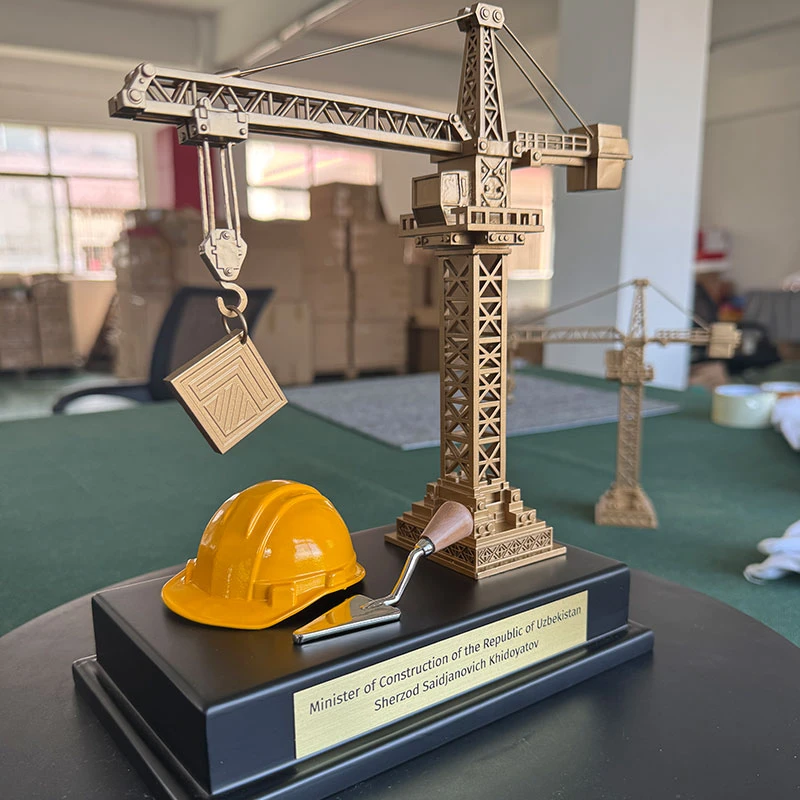
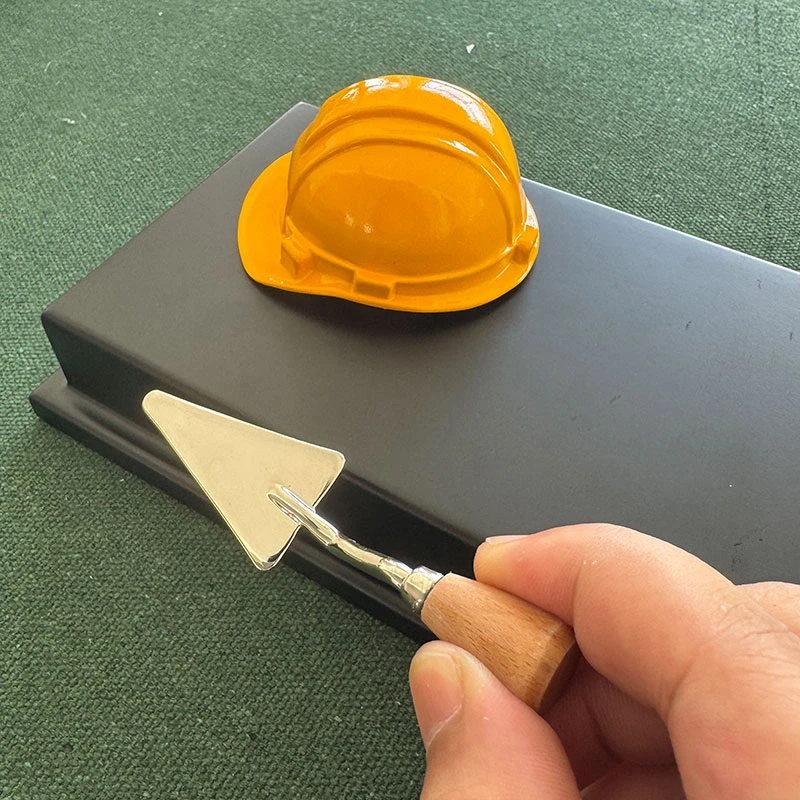
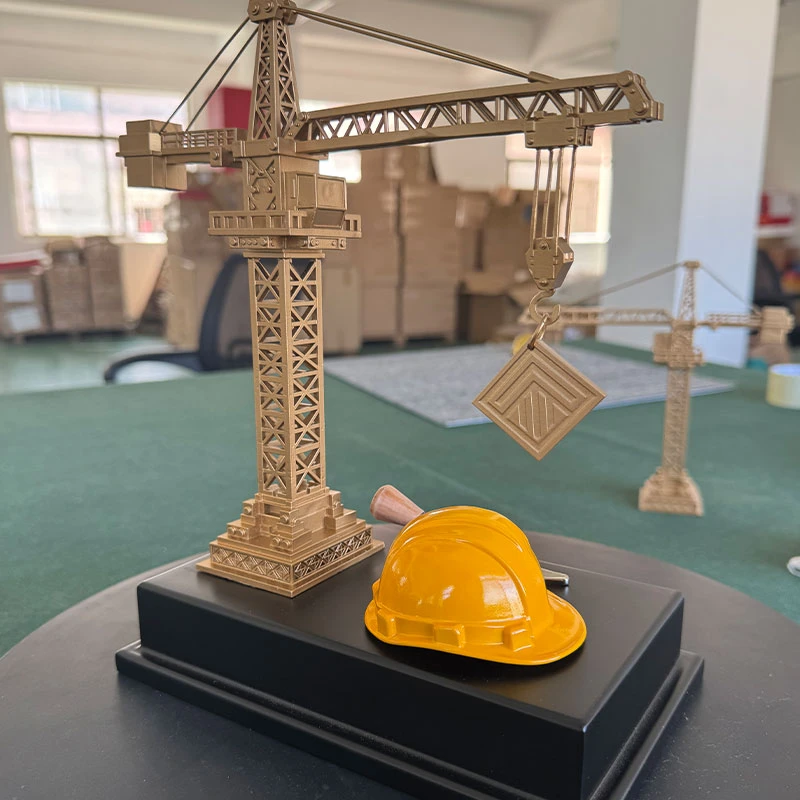
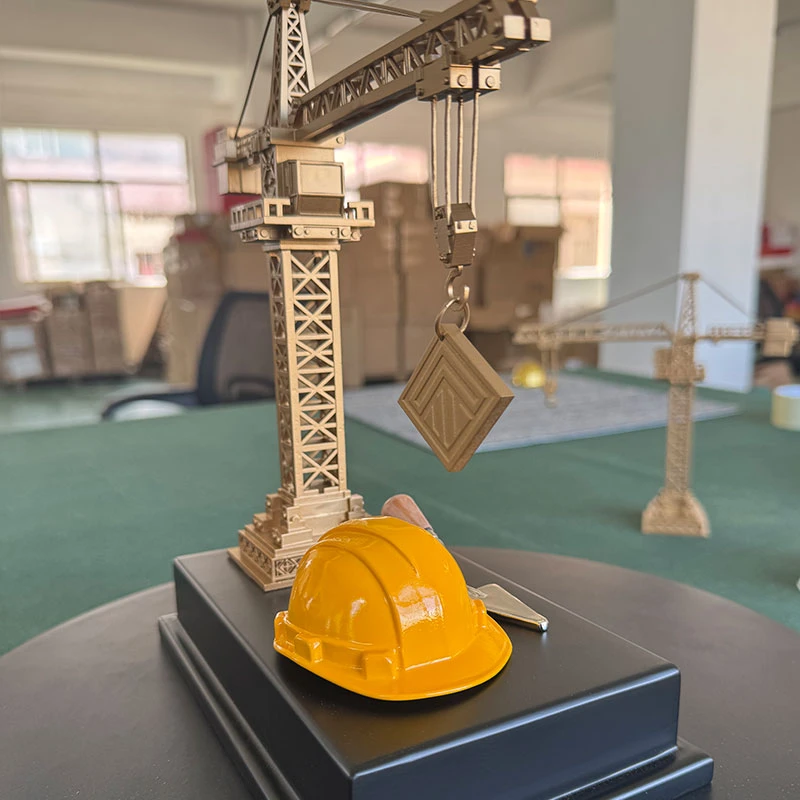
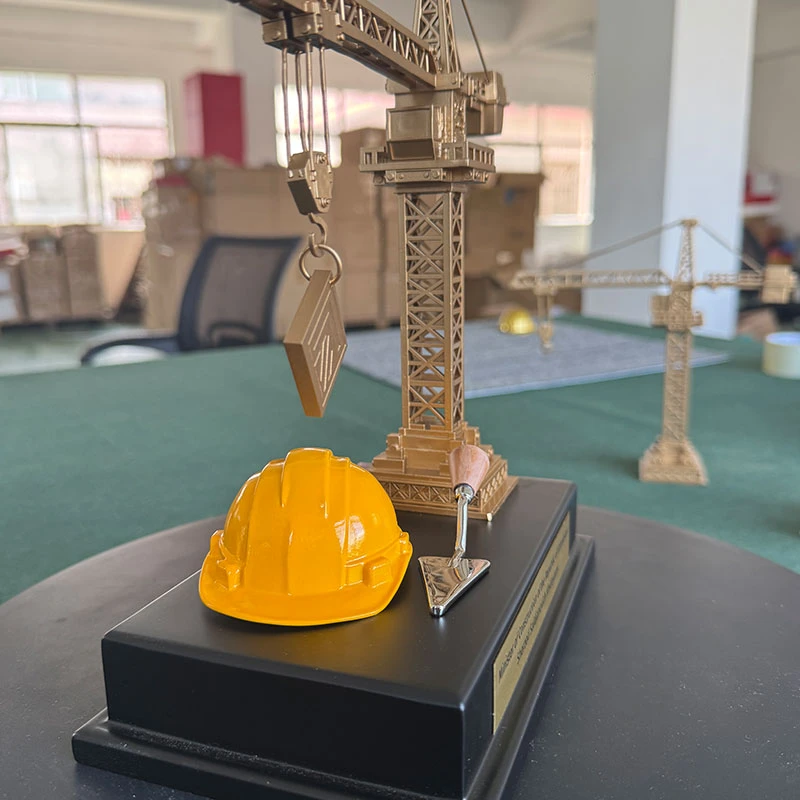
For this custom construction model, the crane’s lower base assembly is formed through pure copper casting, while the miniature safety helmet and shovel are also produced using mold casting. The display base is made of wood and fitted with a metal copper plate for personalization.
The key manufacturing decision is whether to use mold-based production or 3D printing. For batch production, mold making can help achieve consistent appearance and repeatable quality. For a single customized piece, 3D printing may reduce upfront tooling costs. The right solution depends on order quantity, product design, material requirements, and finishing expectations.
At MC ART AWARDS, these factors are evaluated before production so that customers can choose a manufacturing plan that balances cost, appearance, and quality control.
How Is This Custom Tower Crane Model Manufactured?
The production process is determined by the function of each component, its required material, the complexity of the design, and the number of units needed.
1. Pure Copper Casting for the Crane’s Lower Base Assembly
The lower base assembly of the miniature tower crane is made through pure copper casting. This approach allows the component to reproduce the solid structural appearance of the crane while retaining the essential visual details of the original design.
Why Choose Casting for This Component?
Casting is suitable for components that require defined shapes, integrated details, and repeatable production. Once the mold and manufacturing parameters have been established, the same component can be reproduced for subsequent units.
The casting process, mold design, finishing method, and dimensional tolerances should be evaluated together to ensure that the component meets the intended appearance and assembly requirements.
2. Mold-Cast Safety Helmet and Miniature Shovel
The yellow safety helmet and miniature shovel are important details that connect the model to the construction industry. Both components are produced using mold casting rather than being treated as ordinary decorative accessories.
Matching Shape, Surface Finish, and Assembly
For miniature components, small differences in shape, thickness, and surface finishing can noticeably affect the overall product. Mold-based production can support repeatability when the same design is manufactured in quantities.
The material, color, surface treatment, and attachment method should be confirmed before production. This helps ensure that the helmet and shovel complement the crane structure and remain properly positioned on the finished model.
3. Wooden Display Base with a Metal Copper Plate
The complete model is mounted on a wooden display base, which provides a stable presentation platform and separates the mechanical model from the surrounding display surface.
A metal copper plate is attached to the wooden base. This area can be used for a company name, project title, commemorative message, recipient’s name, or other approved text.
Personalization for Corporate and Engineering Gifts
A personalized plate helps turn a miniature crane into a commemorative item associated with a specific project or organization. Before manufacturing, customers should confirm the plate dimensions, text layout, lettering method, finish, and mounting position.
For custom awards and gifts, the size of the display base should also be considered alongside the height, weight, and center of gravity of the crane model.
Why Is Mold Making Used for Batch Production?
Mold making is often selected when a customer needs multiple copies of the same custom product. Although tooling requires an initial investment, it can become more cost-effective as the order quantity increases.
The Main Advantages of Mold-Based Production
Consistency Across Multiple Units
A properly designed mold helps reproduce the same component geometry across a production batch. With controlled casting and finishing procedures, this can reduce variation between individual products.
Better Cost Planning for Larger Orders
Mold development introduces an upfront cost. In batch manufacturing, that cost can be distributed across multiple units, potentially reducing the effective tooling cost per product.
A Repeatable Manufacturing Process
Once the design, mold, material, and finishing requirements are approved, production can follow a defined process. This makes it easier to establish inspection standards and monitor consistency throughout the order.
However, mold making is not automatically the cheapest option for every product. Tooling complexity, material selection, finishing requirements, and order quantity all affect the final cost.
When Is 3D Printing a Better Choice?
For customers who need only one tower crane model, 3D printing may be a more economical option because it can avoid the initial expense of manufacturing a dedicated mold.
Single-Piece Customization
3D printing can be useful for prototypes, one-off commemorative gifts, design samples, and models that need to be evaluated before a larger order is approved.
It can also help customers test proportions, structural arrangements, and small decorative details before committing to a production mold.
Comparing 3D Printing with Mold-Based Manufacturing
| Consideration | 3D Printing | Mold-Based Production |
|---|---|---|
| Best suited for | Single pieces, prototypes, and small quantities | Repeated production and larger batches |
| Initial tooling cost | Usually lower because a dedicated mold may not be required | Higher because mold development is required |
| Cost per unit | Can be attractive for low quantities | Can become more economical as quantity increases |
| Design changes | Often easier before final production | Changes may require mold modifications |
| Material and finish | Depend on the printing process and post-processing | Depend on casting material, mold design, and finishing |
| Repeatability | Depends on printing and finishing controls | Can be highly repeatable with a validated mold and controlled process |
The most suitable method depends on the design and specifications. Some complex models may require a combination of manufacturing methods rather than a single process for every component.
Why the Cheapest Process Is Not Always the Best Solution
A low initial price does not necessarily mean the lowest total project cost. A model may require metallic finishing, detailed surface treatment, component assembly, packaging, and individual quality inspections.
For example, a 3D-printed prototype may be inexpensive to produce, but achieving the required metallic appearance or durability may require additional work. Conversely, a cast component may have a higher initial tooling cost but offer better cost efficiency when produced repeatedly.
The goal is to select the manufacturing process that delivers the required appearance and quality at the right overall cost—not simply to choose the process with the lowest starting price.
What Information Is Needed Before Manufacturing a Custom Tower Crane Model?
Before recommending mold making, 3D printing, casting, or a combination of processes, the manufacturer needs to understand the customer’s actual requirements.
1. Confirm the Required Quantity
Quantity is one of the most important factors in production planning.
A single display model may be suitable for 3D printing or another low-tooling-cost process. A batch of models may justify mold development, depending on the complexity of the design and the required materials.
The expected quantity should therefore be discussed before the manufacturing process is selected.
2. Review the Product Design and Structural Details
The design determines which components can be manufactured directly and which may need separate production and assembly.
Important Design Considerations
Overall height, width, length, and proportions
Structural details of the tower, boom, cables, and hook
Separate components, connection points, and assembly requirements
Surface textures, logos, lettering, and decorative elements
Stability of the model and the design of the display base
A detailed drawing or reference image can help the manufacturer assess complexity. If the customer has only a concept image, the design can be reviewed and developed into a manufacturable solution.
3. Specify the Materials and Surface Finish
Material selection affects appearance, weight, strength, production methods, and cost.
For a tower crane model, requirements may differ between the crane structure, the decorative accessories, and the display base. Copper casting, other metal components, 3D-printed parts, and wood can each serve different purposes depending on the design.
Customers should also clarify the desired finish, such as a metallic appearance, a polished surface, a specific color, or a personalized nameplate.
The selected process should support the required material and final appearance rather than forcing the design into an unsuitable manufacturing method.
4. Establish the Budget, Delivery Schedule, and Quality Standards
A complete production plan should take account of more than the unit price.
The manufacturer needs to understand the target budget, required delivery date, packaging expectations, and acceptable quality standards. These requirements help determine whether the design needs simplifying, whether multiple manufacturing processes are appropriate, and which production steps deserve the greatest attention.
Clear specifications also reduce the risk of unexpected changes after manufacturing has started.
How MC ART AWARDS Helps Customers Control Manufacturing Costs
MC ART AWARDS provides customized awards and commemorative products for business customers, including models that combine multiple materials and manufacturing processes.
Rather than selecting a production method before understanding the project, the process begins with the customer’s intended quantity, design, material preferences, and quality expectations.
A Practical Approach to Custom Manufacturing
Step 1: Understand Your Requirements
Share your reference images, available drawings, required quantity, approximate dimensions, and intended use. If some details have not been finalized, the initial discussion can identify the decisions that still need to be made.
Step 2: Evaluate the Manufacturing Options
The product design and quantity are assessed to determine whether mold casting, 3D printing, or a combination of methods is appropriate. This helps avoid investing in unnecessary tooling for a single piece or overlooking the potential benefits of tooling for repeated production.
Step 3: Confirm Materials, Finishing, and Production Details
The selected materials, surface treatments, component connections, display base, and personalized elements should be agreed upon before production. A clear specification provides a practical reference for production and quality inspection.
Step 4: Plan Quality Control Around the Design
Inspection can focus on the dimensions, surface finish, assembly, stability, personalization, and overall consistency relevant to the approved product. The exact inspection criteria depend on the final design and the customer’s requirements.
This structured approach helps control costs while maintaining a clear standard for the finished product.
Create Your Custom Tower Crane Model with MC ART AWARDS
Whether you need one unique construction-themed commemorative gift or a batch of custom tower crane models for a company project, the most effective solution starts with understanding what you need to manufacture.
Contact MC ART AWARDS before committing to a mold or production process. Share your design or reference images, required quantity, preferred materials, dimensions, and expected delivery date. Our team can evaluate the available manufacturing options and help develop a production plan that balances cost, appearance, and quality requirements.
No. Mold making is not always necessary. It is often worth considering when multiple units need to be produced with consistent shapes and details. For a single model, 3D printing or another process that avoids dedicated tooling may reduce initial costs. The best option depends on the design, material, finishing requirements, and order quantity.
For a single piece or prototype, 3D printing may be more economical because a dedicated mold is usually unnecessary. For larger production quantities, mold-based manufacturing may offer a lower cost per unit. The comparison should include tooling, materials, finishing, assembly, and quality inspection rather than considering the basic production cost alone.
Materials depend on the required design and manufacturing process. A model may combine cast copper components, other metal parts, 3D-printed elements, and a wooden display base with a metal plate. The suitable material for each component should be confirmed according to the required appearance, structural details, surface finish, and budget.
Provide the required quantity, reference images or technical drawings, approximate dimensions, preferred materials, surface finish, personalization details, budget, and delivery schedule. If you do not have a complete drawing, reference photographs and a description of the intended result can help the manufacturer evaluate the design and recommend a suitable production method.
Start by confirming the required quantity and selecting a manufacturing process suited to that quantity. Simplify non-essential details where possible, choose practical materials and finishes, and finalize the design before tooling or production begins. A manufacturer should evaluate the entire process—including tooling, component production, assembly, finishing, and inspection—to recommend a cost-effective solution that meets the agreed quality standards.